What is Well Being?
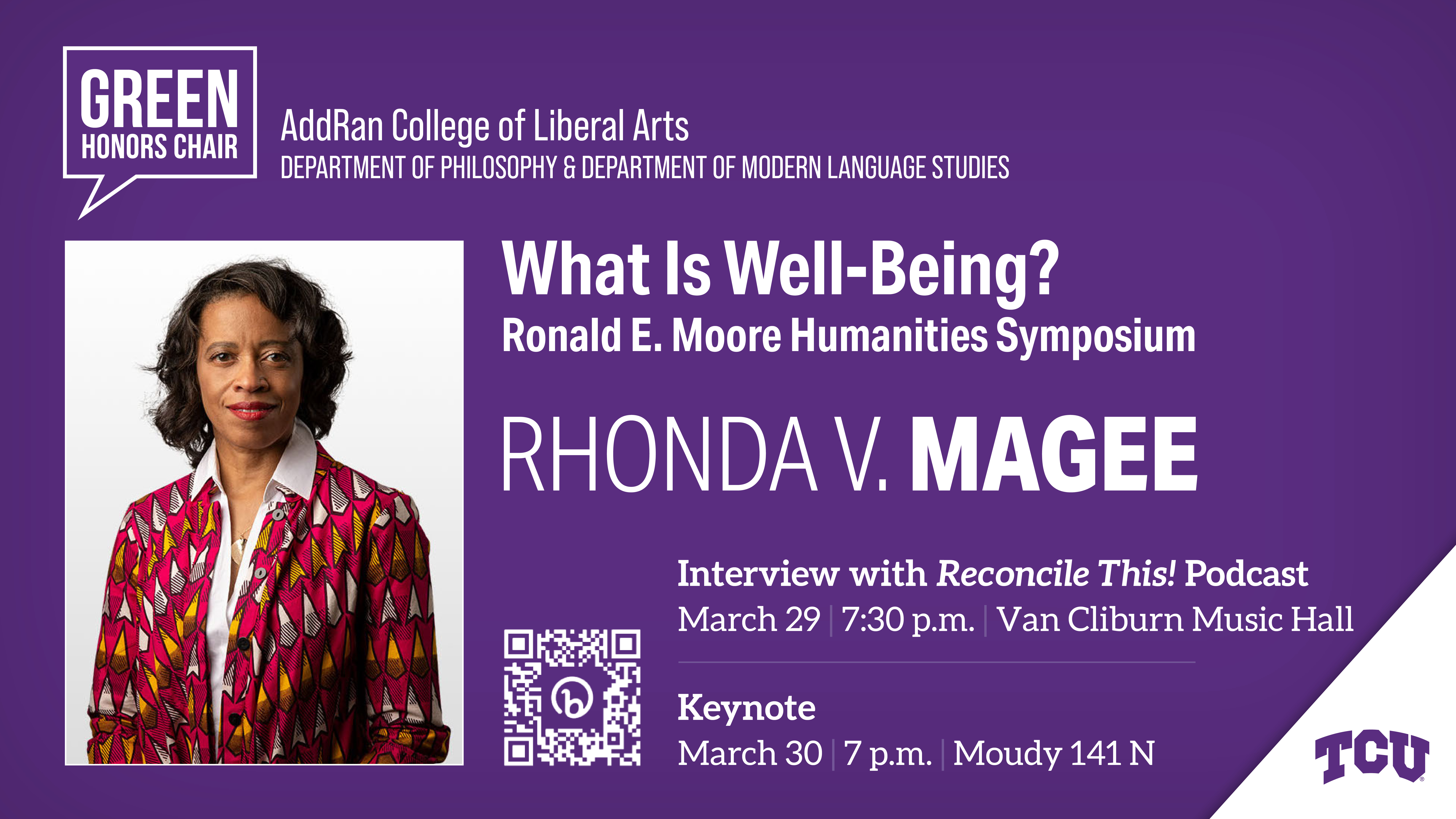
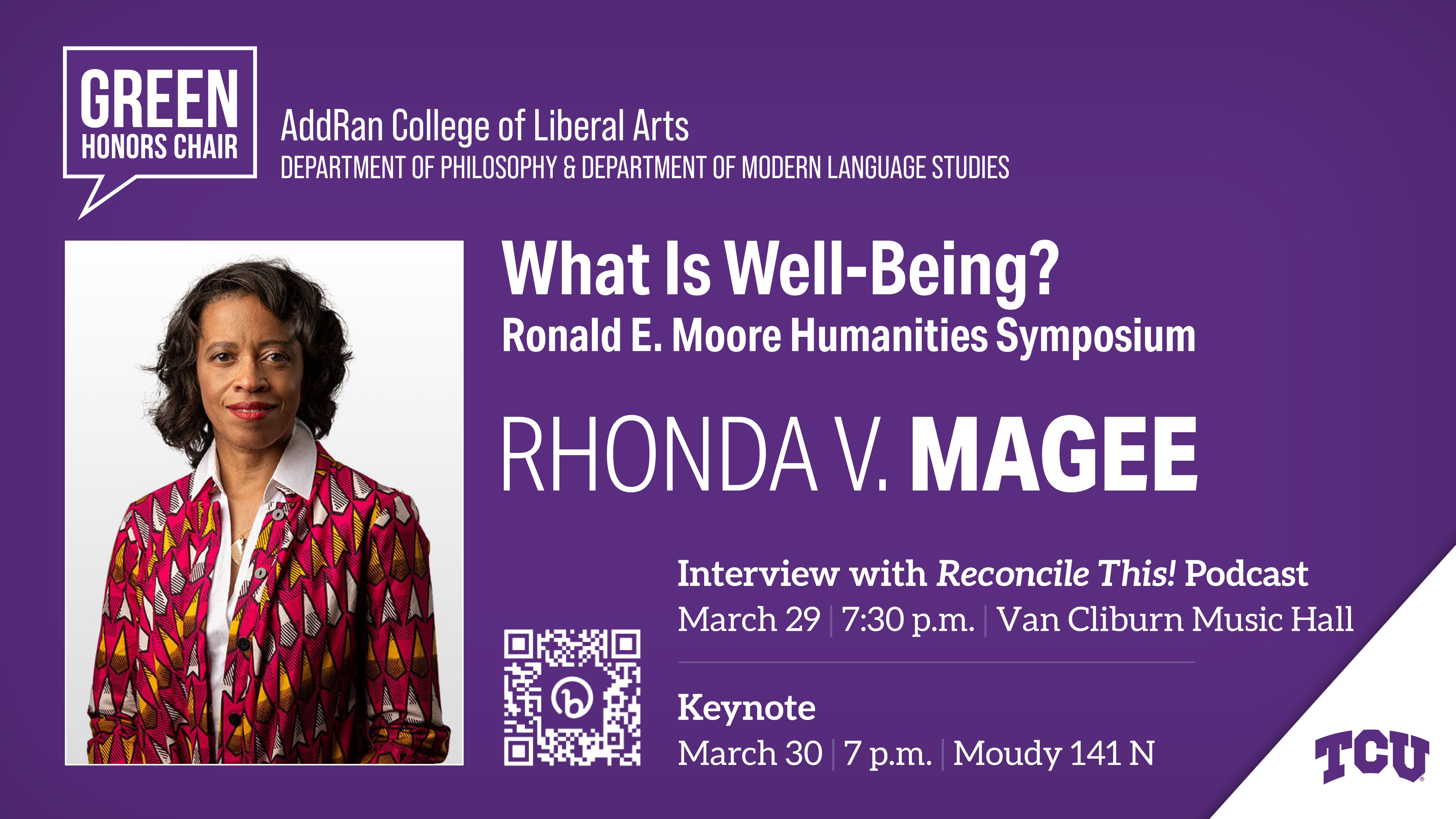
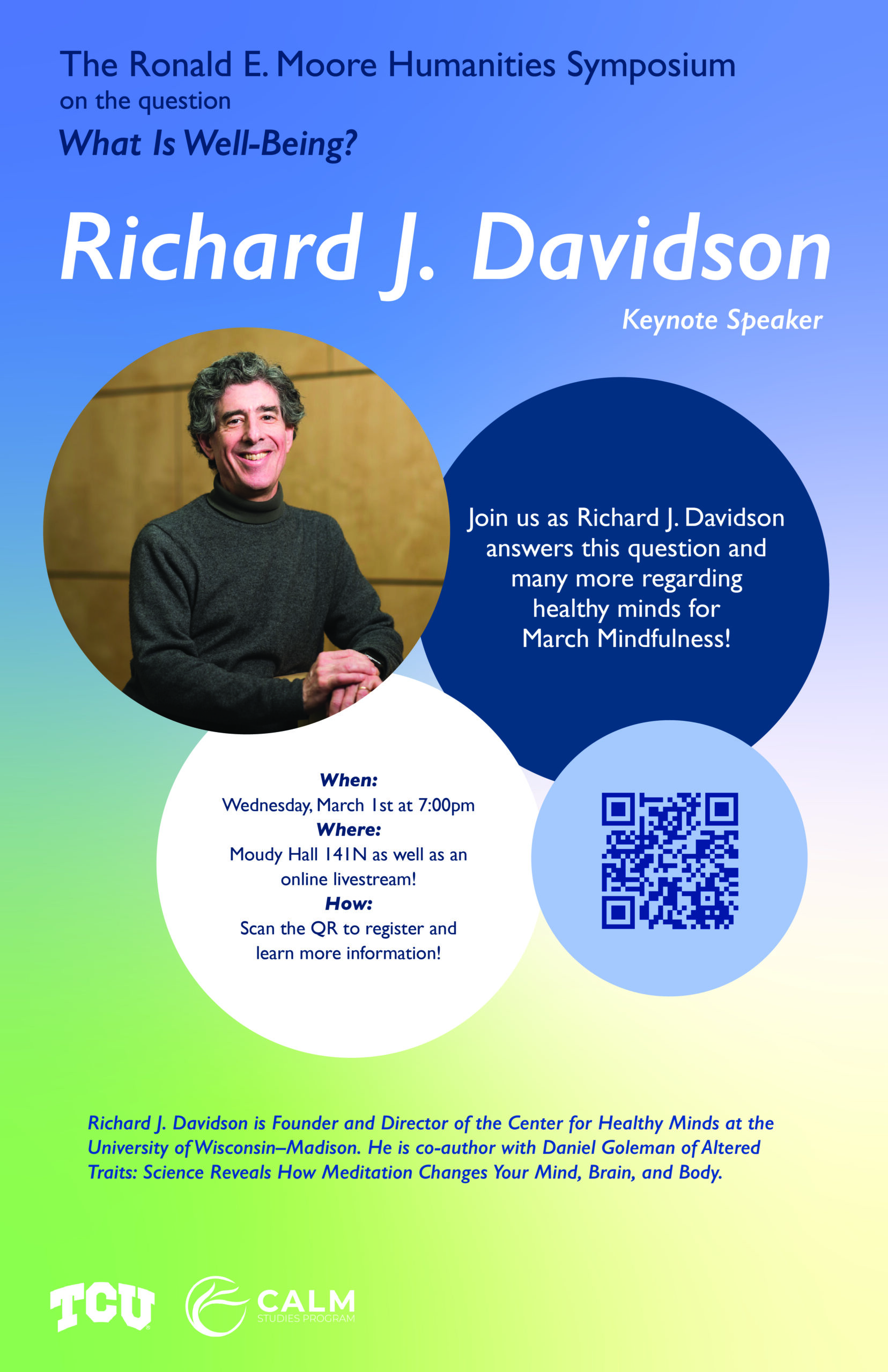
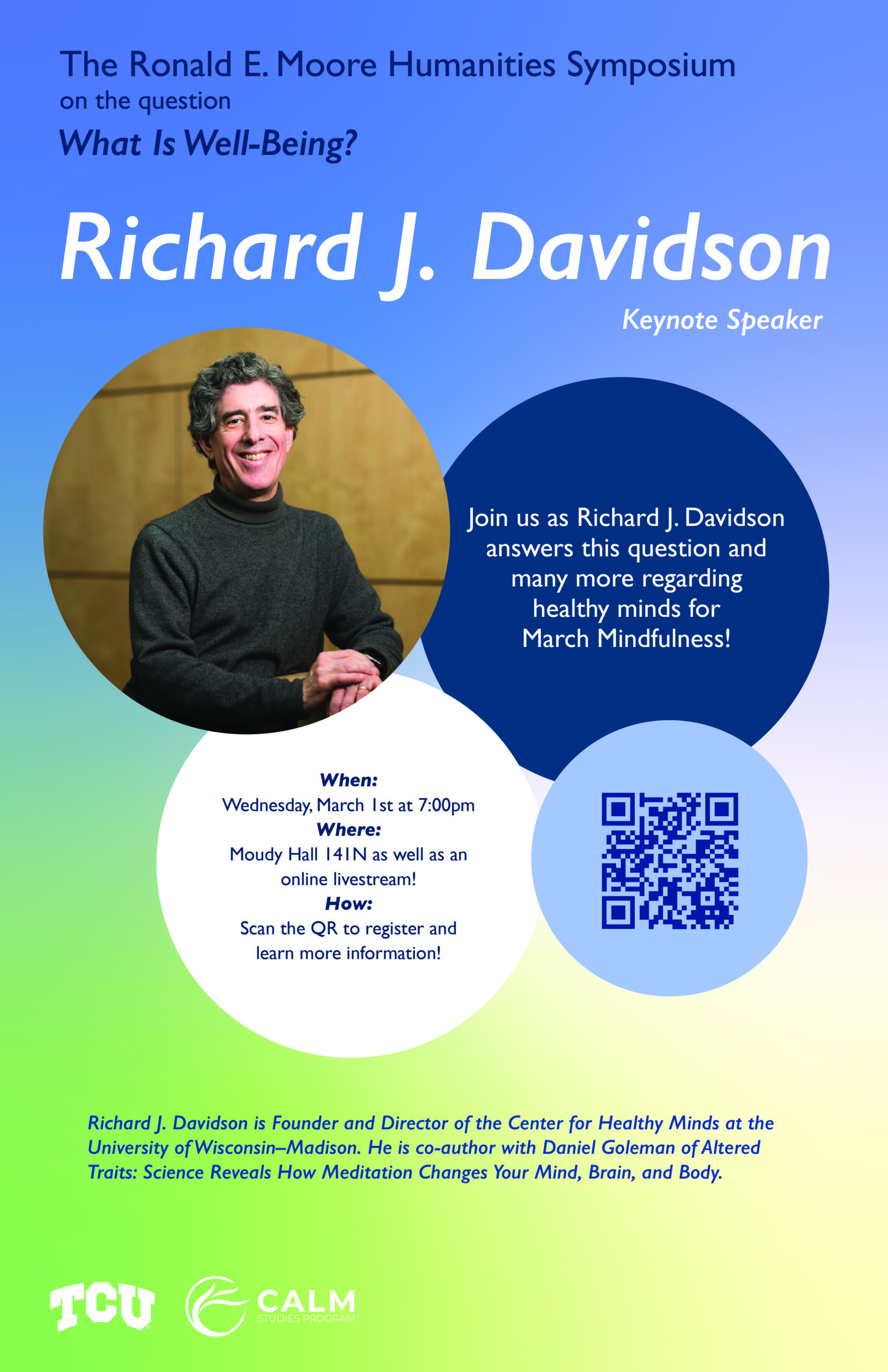
Join us for a keynote talk by Rhonda V Magee to hear more about mindfulness and “What Is Well Being?”
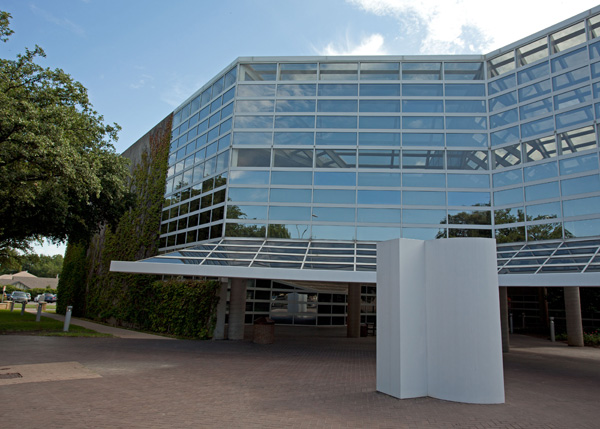
Moudy North
Fort Worth, TX 76129
Join us for a keynote talk by Rhonda V Magee to hear more about mindfulness and “What Is Well Being?”
Green Honors Chair, Rhonda V. Magee, joins us for a live Interview Podcast “Reconcile This!” and a keynote talk the next evening. Please scan the QR Code to register for one or both events!
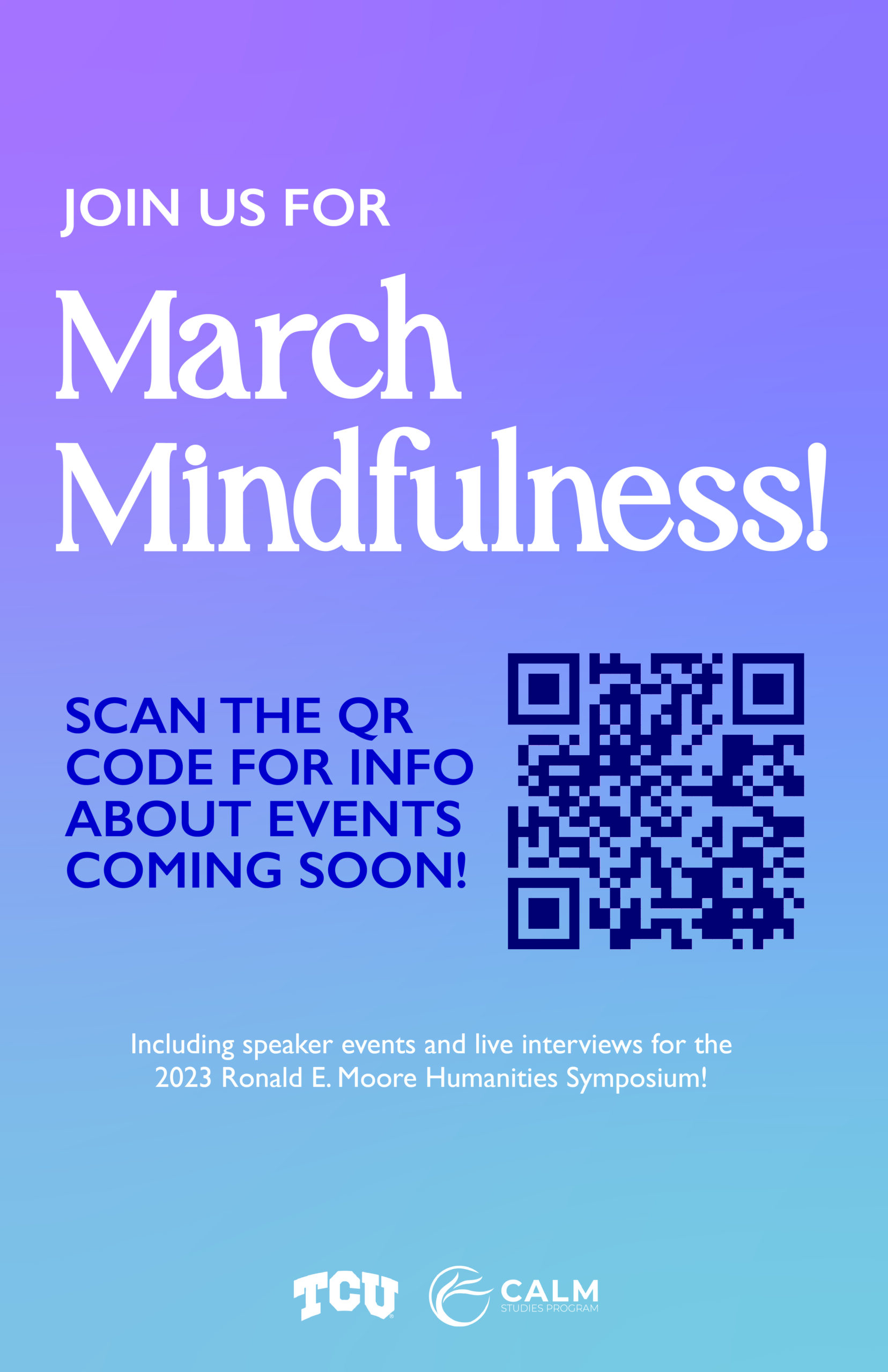
Several mindfulness events are happening in March, including Keynote Speakers Richard Davidson and Rhonda v. Magee.
Richard Davidson is Founder and Director of the Center for Healthy Minds at the University of Wisconsin–Madison. The mission of the Center for Healthy Minds (Center) is to cultivate well-being and relieve suffering through a scientific understanding of the mind. Faced with mental and physical health challenges at a global scale, the Center conducts rigorous scientific research to bring new insights and tools aimed at improving the well-being of people of all backgrounds and ages. The Center’s research, rooted in neuroscience, comes down to on basic question: “What constitutes a healthy mind?”
To begin to answer this, the Center has investigated the science of emotions, contemplative practices and qualities of mind suspected to affect well-being, including attention, resilience, equanimity, savoring positive emotions, kindness, compassion, gratitude and empathy. The Center, part of one of the world’s top research institutions, benefits from cross-disciplinary collaborations in the arts and humanities, the physical and natural sciences, and the social sciences.
Healthy Minds Innovations (HMI), which was also co-founded by world renowned neuroscientist Dr. Richard Davidson is a non-profit organization driven by the mission to translate science into tools that cultivate well-being. HMI takes discoveries and insights gleaned from research and translates them into tools that help people around the world learn and build skills of well-being. These tools include a donation-supported app, the Healthy Minds Program (which uses podcast style lessons and meditations to support increased awareness, connection, insight and purpose), and our workplace program Healthy Minds @Work (a science-based program that offers a suite of tools to improve well-being in the workplace). In addition to creating products and services and sharing them widely, HMI also manages philanthropic activities, public speaking engagements and special initiatives that bring this work to the world.
The Center and HMI both seek to work as widely as possible, reaching the farthest corners of the globe to realize a vision of a kinder, wiser, more compassionate world.

Join us in person, or livestream, to hear Richard Davidson speak to the question “What is well-being?” and more regarding healthy minds for March Mindfulness!
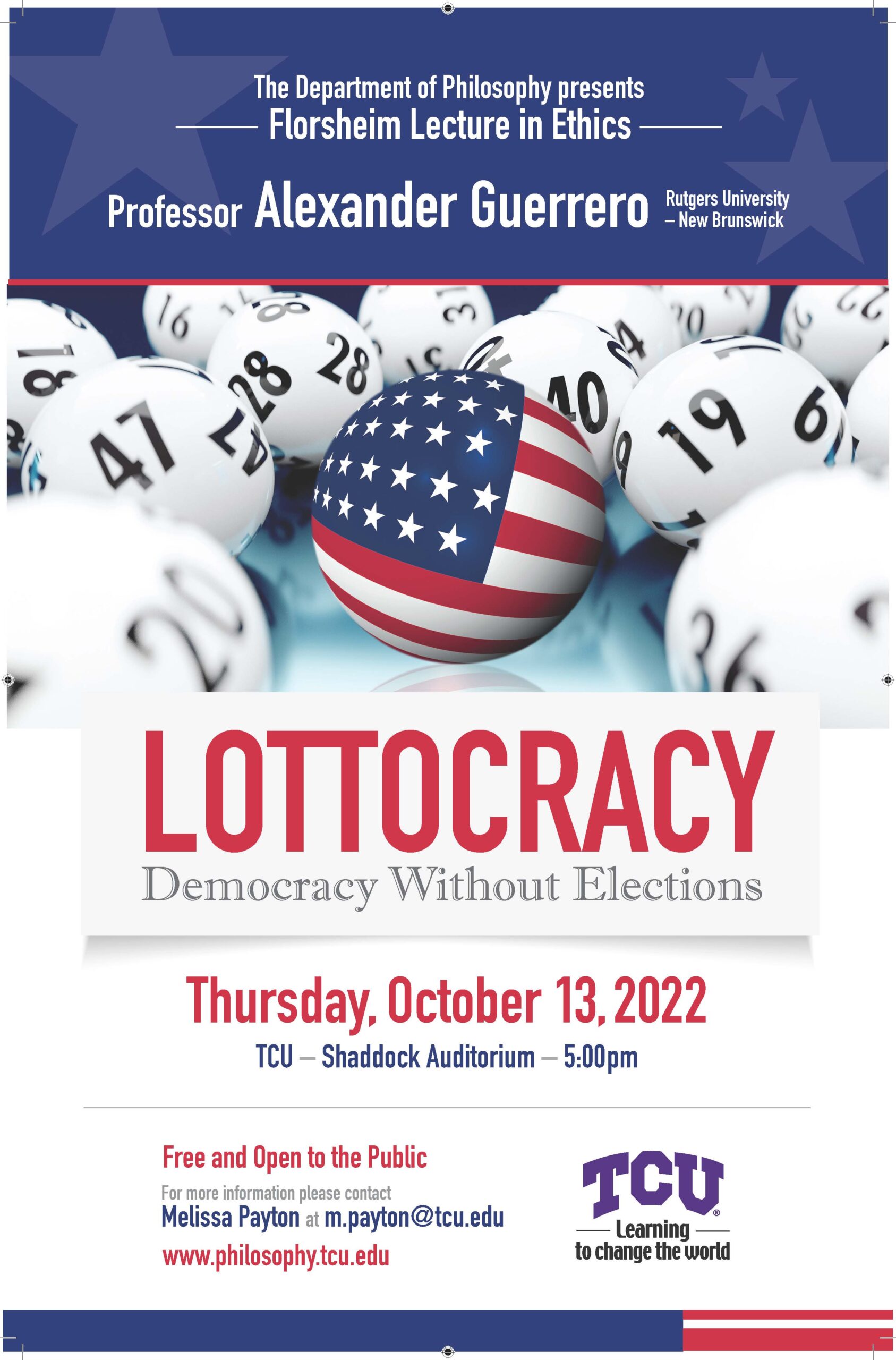
Must democracy involve elections? Election is a time-honored, but arguably deeply flawed part of all modern democracies. But what if representatives were chosen randomly–by lottery? Is this still democracy, and of a less elitist kind? In this lecture we will compare the merits of the method of election to those of a carefully designed system of “lottocracy.” The lecture has two main aims. The first is to present a case against what is the heart of almost every modern political system: the use of elections to choose political representatives. The second is to move past what we might call the “Churchillian shrug” (‘the worst form of government, except for all the others…’) by introducing and defending lottocracy, a new kind of political system with a very different heart: a system that uses random selection, rather than elections, to select political representatives. Lottocracy may have the upper hand.
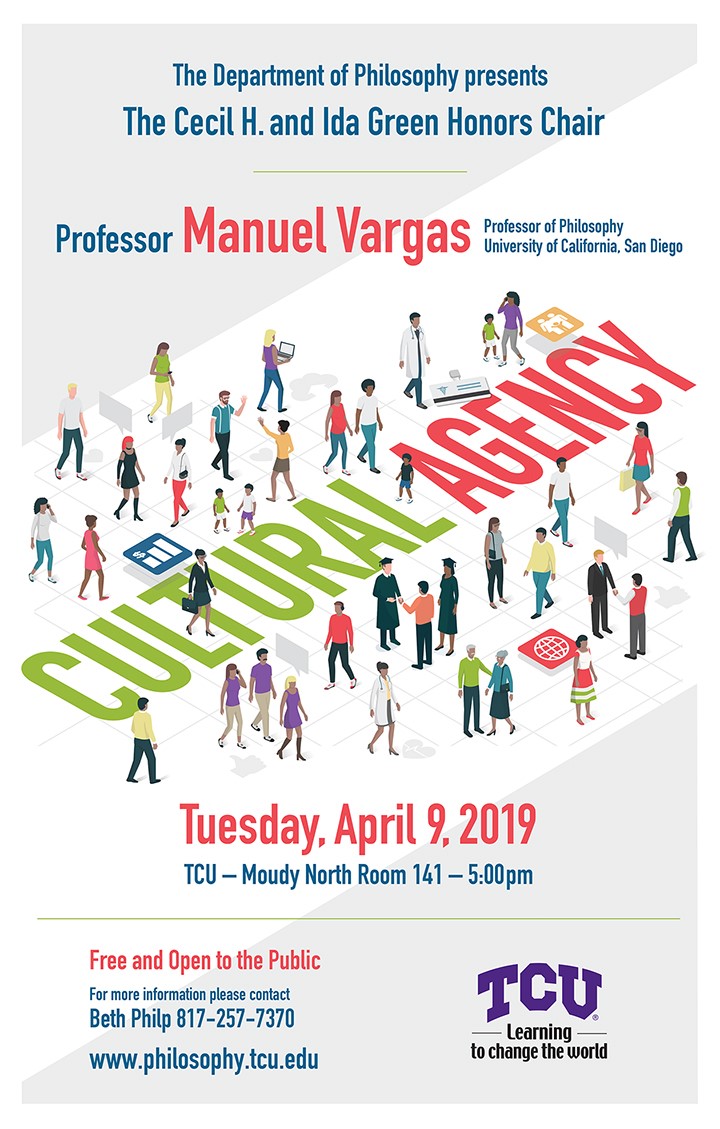
One’s reasons, values, and sense of what makes a life meaningful are partly a product of one’s particular cultural upbringing. Sometimes the packages of meanings and values afforded to us by our cultural milieus fail to resonate with us. In these cases, how one should live one’s life can seem unclear. Drawing from a neglected strand of existentialist thought, this talk explores some of the challenges that arise from these misalignments in value and life, and it highlights some promising resources for thinking about culturally structured agency.
Manuel R. Vargas is a Professor of Philosophy at the University of California, San Diego. His research focuses on the overlap of moral, psychological, and legal issues concerning human agency and freedom. He also writes about Latinx and Latin American philosophy. Previously, he was a Professor of Philosophy and Law at the University of San Francisco.
Vargas’s research has been recognized with a variety of national awards, prizes, grants, and fellowships. Most recently Vargas and Sanitago Amaya (Universidad de los Andes) were awarded a $1.2 million grant from the John Templeton Foundation for their multi-year international project, “LATAM Free Will, Agency, and Responsibility.”
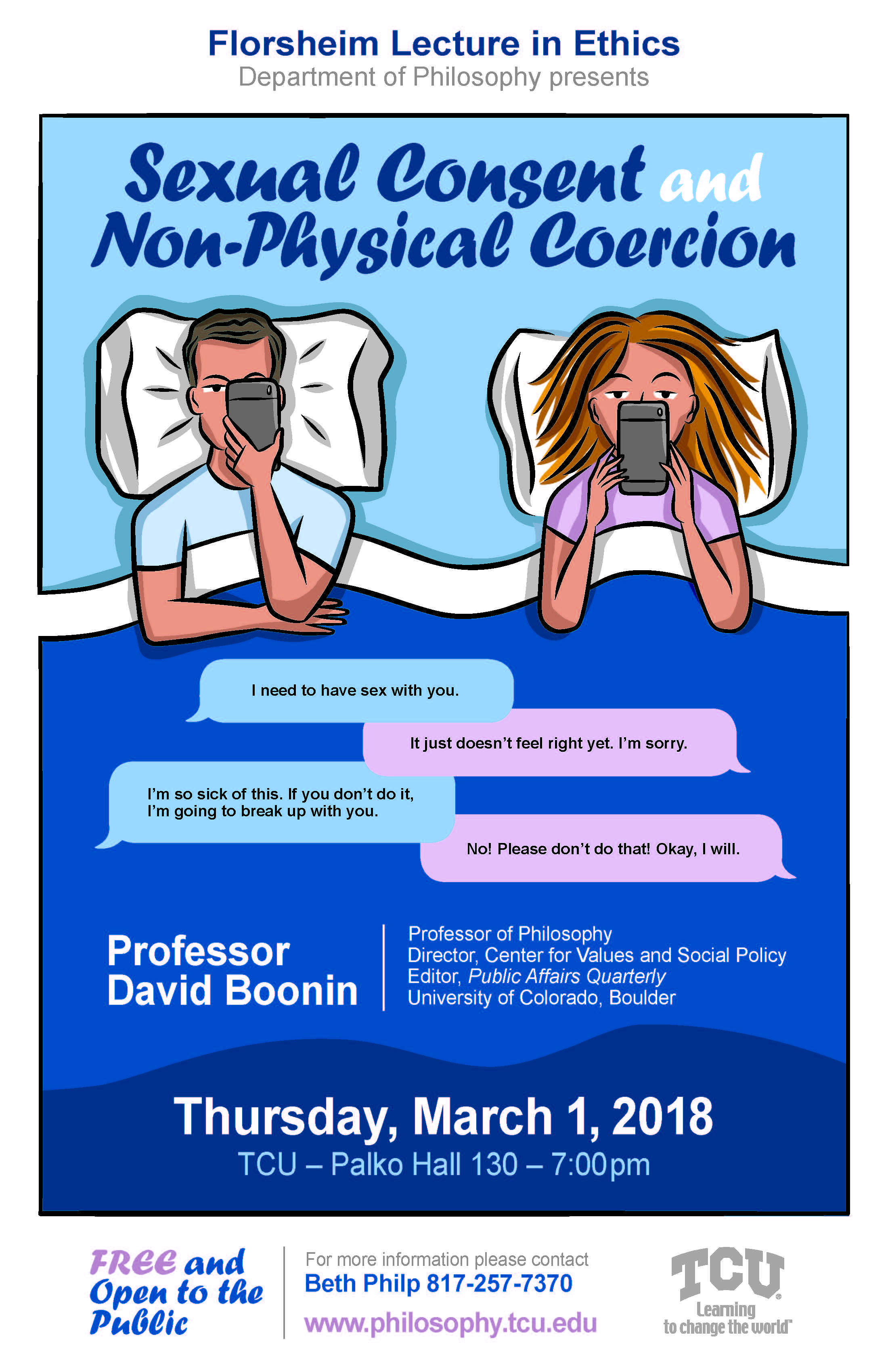
You are invited – to the Florsheim Lecture in Ethics.
David Boonin, Professor from University of Colorado, Boulder will present
“Sexual Consent and Non-Physical Coercion”
Free and Open to the Public.
Lecture and Q&A to follow.